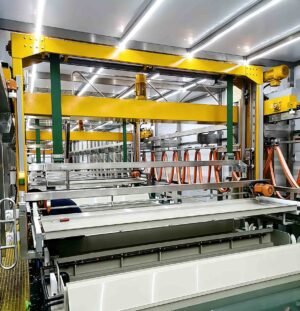
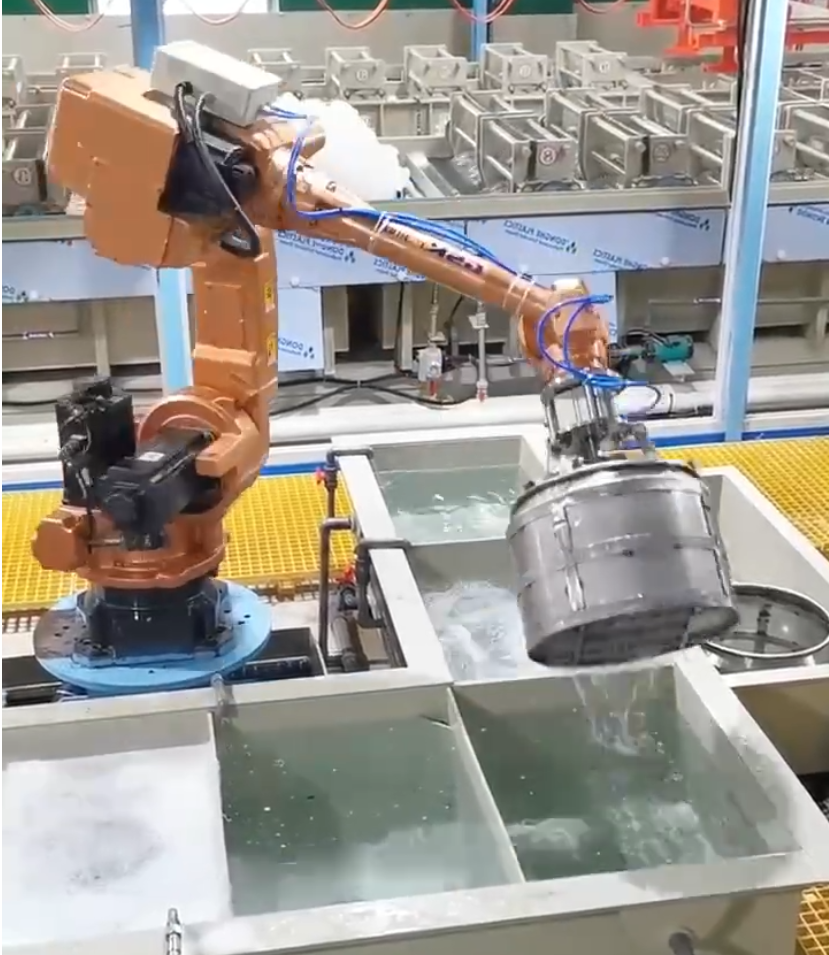
In the world of manufacturing and metal finishing, few processes are as ubiquitous yet unsung as electrolytic nickel plating. As we move through 2026, this classic technique is not only maintaining its relevance but is evolving to meet the demands of electric vehicles (EVs), aerospace innovation, and high-tech electronics.
Whether you are looking to improve the corrosion resistance of heavy machinery or add a lustrous finish to decorative bathroom fixtures, understanding the nuances of nickel electroplating is essential.
Here is your comprehensive guide to electrolytic nickel plating, its benefits, how it works, and why it remains the workhorse of the surface finishing industry in 2026.
What is Electrolytic Nickel Plating?
Electrolytic nickel plating, also known as nickel electroplating, is an electrochemical process where a layer of pure nickel is deposited onto the surface of a conductive material (typically metal) -2. This is achieved by using an external electric current to reduce nickel ions in a chemical solution, which then bond to the substrate.
The primary goals of this treatment are twofold: protection and aesthetics. The nickel layer acts as a robust barrier against corrosion and wear, while also providing a bright, appealing finish that serves as an excellent base for subsequent coatings like chrome -1.
The Science Behind the Shine: How It Works
To understand the process, picture an electrolytic cell consisting of three key components -9:
- The Cathode (-): This is the part you want to plate. It is connected to the negative terminal of a rectifier (power supply).
- The Anode (+): Usually made of pure nickel, this is connected to the positive terminal.
- The Electrolyte: A conductive solution known as a “bath.” The most common formulation is the Watts bath, containing nickel sulfate, nickel chloride, and boric acid -1-9.
The Reaction:
When the current flows, the nickel anode dissolves, releasing positive nickel ions (Ni²⁺) into the solution. Simultaneously, at the cathode (your part), these nickel ions are reduced and deposit as a solid, uniform layer of metallic nickel -6. The boric acid acts as a buffer to maintain the optimal pH, usually between 3.8 and 4.8 -9.
Key Benefits of Electrolytic Nickel Plating
Why choose electrolytic nickel over other coatings? The benefits extend far beyond simple aesthetics -2-6:
- Superior Corrosion Resistance: Nickel is a cathodic coating, meaning it protects the base material by sealing it from the environment. When combined with multi-layer systems (like copper + nickel + chrome), it offers exceptional durability -1.
- Enhanced Conductivity: Unlike electroless nickel (which is an alloy), electrolytic nickel is pure metal. This makes it the superior choice for electronic components where electrical conductivity is critical -2.
- High Ductility: The deposit is highly ductile, allowing parts to undergo post-plate stamping or bending without cracking the finish. It can meet or exceed strict aerospace standards like AMS 2424 -2.
- Aesthetic Versatility: By using different brighteners and additives in the bath, platers can achieve a range of finishes from mirror-bright (decorative) to satin or matte -6.
- High Heat Tolerance: Electrolytic nickel can withstand extreme temperatures, functioning effectively up to 1,832°F (1,000°C) -2.
Electrolytic vs. Electroless Nickel: 2026 Perspective
One of the most common points of confusion in the industry is the difference between electrolytic and electroless nickel plating. In 2026, the choice between them is more strategic than ever -2-9.
| Feature | Electrolytic Nickel Plating | Electroless Nickel Plating |
|---|---|---|
| Process | Uses an electric current to deposit pure nickel. | Uses a chemical (autocatalytic) reaction to deposit a nickel-phosphorus alloy. |
| Uniformity | Thickness can vary on complex shapes; “throwing power” is limited. | Provides perfectly uniform thickness, even on intricate geometries and inside holes. |
| Conductivity | High (Pure nickel). | Low (Due to phosphorus content). |
| Appearance | Highly customizable (bright, semi-bright, matte). | Typically semi-bright or matte; less aesthetic variation. |
| Speed/Cost | Faster deposition; generally more cost-effective for high-volume production. | Slower process; typically more expensive due to chemical costs. |
Verdict: Choose electrolytic for high-volume production, conductive needs, and decorative finishes. Choose electroless when plating complex internal surfaces or requiring extreme uniformity for critical engineering applications -2.
Common Applications Across Industries
As of 2026, the market for nickel plating is expanding, particularly in the Asia-Pacific region which dominates over 50% of the market share -3. Here is where you will find electrolytic nickel at work -2-9:
- Automotive & EV: Battery contacts, busbars, and under-hood components. The shift to EVs requires the high conductivity that only pure nickel plating can provide.
- Aerospace: Landing gear components and turbine blades, where high heat tolerance and corrosion protection are non-negotiable.
- Electronics: Connectors and shielding to improve conductivity and solderability.
- Industrial Machinery: Hydraulic pistons and heavy machinery parts to restore dimensions and resist wear.
- Decorative: Bathroom fixtures, door hardware, and jewelry, where a bright, tarnish-resistant finish is desired.
Best Practices for a Quality Finish
To achieve a defect-free coating in 2026, platers must pay close attention to the following parameters:
- Pre-Treatment is Everything: The surface must be impeccably clean. Oils, dirt, or oxides will result in peeling or pitting. A waterbreak test (where water sheets off clean metal rather than forming droplets) is a quick way to verify cleanliness -6.
- Control Current Density: Higher current density speeds up deposition but can lead to “burning” (poor quality deposits). For high-quality work, a “strike” layer of thin, high-quality nickel is often applied first, followed by a thicker build layer -6.
- Bath Chemistry: Maintaining the correct pH and filtration is vital. Impurities in the bath are a leading cause of common defects like pitting and porosity -1.
The Future: What’s Driving the Market in 2026?
Recent market analysis indicates that the nickel plating segment is set to grow at a CAGR of over 6% through 2031 -3. The key drivers?
- Green Hydrogen: The build-out of electrolyzers for hydrogen production requires large-scale nickel plating to prevent corrosion in high-pH environments.
- Electronics Miniaturization: As semiconductors shrink, the need for precise, ultra-thin deposits (sub-100 nm) is pushing innovation in pulse-plating techniques.
- Sustainability: The push to replace hexavalent chromium and PFAS chemicals is leading to new formulations in plating baths, making the industry safer and more environmentally friendly.
Conclusion
Electrolytic nickel plating remains a cornerstone of modern manufacturing. Its unique combination of corrosion protection, conductivity, and aesthetic appeal makes it indispensable. As we progress through 2026, the technology is adapting to meet the challenges of green energy and high-tech electronics, ensuring that this classic finish will continue to protect and enhance our world for decades to come.
Are you looking for a reliable partner for your metal finishing needs? Contact us today to discuss how our electrolytic nickel plating services can benefit your next project.