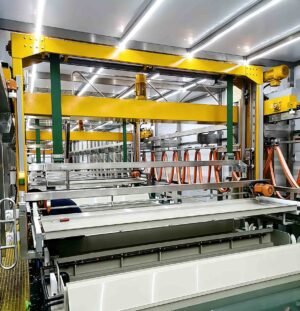
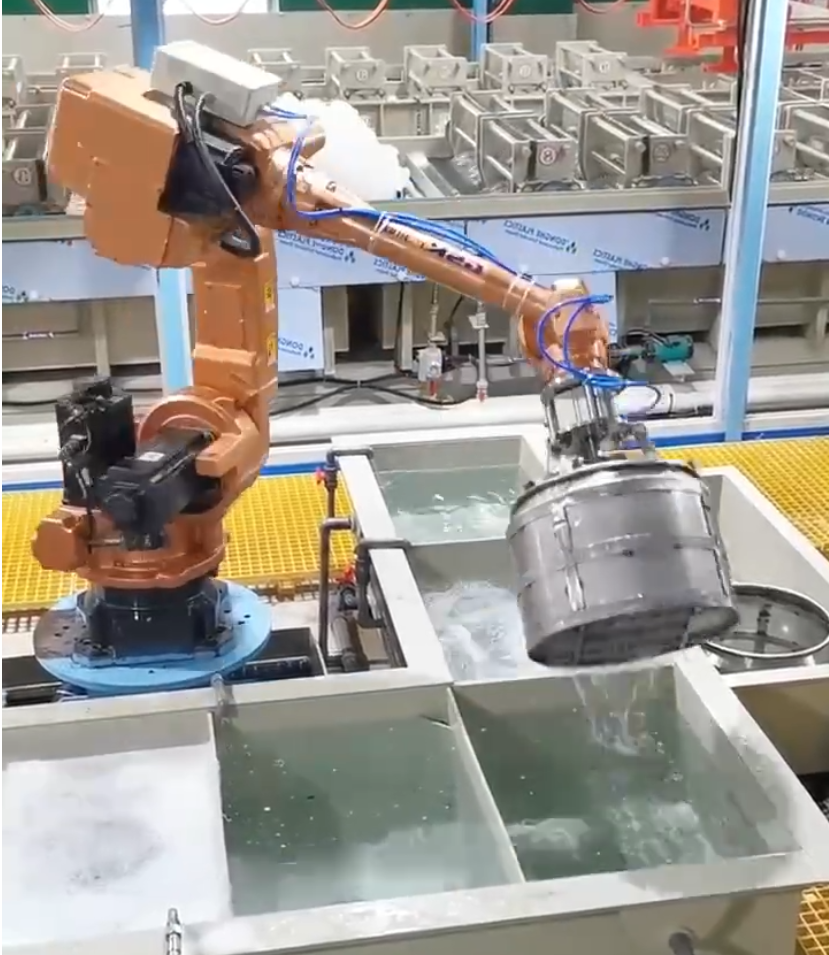
In the world of metal finishing, few coatings command as much respect and recognition as chromium. Known for its mirror-like shine and legendary hardness, chromium electroplating has been a cornerstone of industrial surface treatment for over a century. From the gleaming bumpers of classic cars to the robust hydraulic rods in heavy machinery, chrome is everywhere.
But what exactly is chromium electroplating? How does it work, and why is the industry currently undergoing a significant transformation? This guide covers everything you need to know about this essential finishing process in 2026.
What is Chromium Electroplating?
Chromium electroplating is an electrochemical process that deposits a layer of chromium onto the surface of a metal object -4. Typically applied to substrates like steel, nickel, or copper, this coating serves two primary purposes: aesthetic enhancement and functional protection -9.
The resulting chrome layer is renowned for its unique combination of properties. It offers a bright, reflective finish that is visually appealing while simultaneously providing exceptional resistance to corrosion, wear, and heat -1-4.
The Two Main Types of Chrome Plating
While often grouped under the same name, chromium plating is generally divided into two distinct categories based on the application and layer thickness.
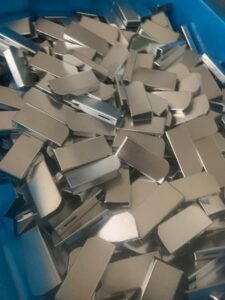
1. Decorative Chrome Plating
Decorative chrome is what most people picture when they think of “chrome plating.” It is a thin layer of chromium, typically 0.001 to 0.003 mm thick, applied to enhance the appearance of products -1.
- Purpose: Primarily aesthetic, providing a sleek, bluish-silver mirror finish -10.
- Applications: Automotive trim (door handles, grilles), bathroom faucets, kitchen appliances, and furniture -3-6.
- Structure: To ensure corrosion resistance, decorative chrome is almost always plated over a layer of nickel, which sits on top of the base metal (usually steel or zinc) -10.
2. Hard Chrome Plating (Industrial Chrome)
Also known as functional chrome, hard chrome is significantly thicker, ranging from 0.005 mm to over 0.35 mm depending on the wear requirements -6.
- Purpose: To reduce friction, increase hardness, and restore the dimensions of worn parts -6.
- Properties: It boasts a high hardness rating of 900 to 1,200 HV, making it one of the hardest industrial coatings available -6.
- Applications: Hydraulic rods, piston rings, printing rollers, molds, and cutting tools -6-8.
The Science and Chemistry Behind the Process
The principle behind chromium electroplating is electrolysis, but the chemistry involved is uniquely complex -10.
The Traditional Process (Hexavalent Chromium)
For decades, the industry has relied on a solution of chromic acid containing hexavalent chromium (Cr⁶⁺) and a catalyst like sulfuric acid -5-10. When an electric current is passed through the bath:
- The part to be plated (cathode) is connected to the negative terminal.
- Insoluble anodes (often made of lead) are connected to the positive terminal.
- Chromium ions in the solution are reduced at the cathode, forming a solid metal layer on the part -4.
The Challenge: This process is notoriously inefficient. Only 10% to 18% of the electrical current is actually used to deposit chromium; the rest is wasted on generating hydrogen gas -5-10. Furthermore, hexavalent chromium is a highly toxic substance, posing significant environmental and health risks -4.
The Industry Shift: Trivalent Chromium
The biggest trend in chromium plating today is the transition from hexavalent chromium (Cr⁶⁺) to trivalent chromium (Cr³⁺) -3-4.
Why the change? Trivalent chromium is significantly less toxic and easier to treat in wastewater, making it a more environmentally friendly and safer option for workers -4.
- Advantages of Trivalent Chrome:
- Environmental Compliance: Meets strict modern regulations regarding toxic substances.
- Improved Coverage: Offers better throwing power, meaning it coats complex shapes and recessed areas more uniformly than traditional hexavalent baths -10.
- Color Consistency: Modern trivalent processes can achieve the exact blue-white color of traditional chrome, with color values meeting L=83-85, a=-0.5 to -0.8, and b=-0.5 to -1.5 -3.
However, trivalent baths can be more sensitive to contamination and are primarily used for decorative applications, as achieving very thick, hard coatings is more challenging than with hexavalent chemistry -10.
Key Benefits of Chrome Plating
Why do industries continue to rely on this process?
- Extreme Hardness: Chrome significantly increases the surface hardness of parts, protecting them from scratches, dents, and abrasion -4-6.
- Corrosion Protection: The chromium layer acts as a barrier against moisture and chemicals, preventing rust on the underlying steel -1.
- Low Friction: It has one of the lowest coefficients of friction of any metal, which reduces wear on moving parts and improves efficiency -6-10.
- Heat Resistance: Chrome plating retains its hardness and does not oxidize significantly below 500°C, making it suitable for engine and high-temperature applications -1-10.
- Aesthetic Longevity: Unlike silver, chrome does not tarnish, maintaining its reflective brightness indefinitely -10.
Applications Across Industries
- Automotive: Decorative trim and hard chrome on shock absorber rods and piston rings -6-8.
- Aerospace: Landing gear components and hydraulic actuators requiring extreme reliability -9.
- Printing & Paper: Cylinders and rollers that need a flawless, wear-resistant surface to handle continuous operation -6.
- Mold & Die: Enhancing the release properties and lifespan of plastic molds and stamping dies -1-8.
- Consumer Goods: Hardware, lighting, and fixtures that require a durable, attractive finish -3.
The Future of Chrome Plating
The future is undoubtedly trivalent. Companies and chemical suppliers are investing heavily in perfecting Cr³⁺ baths for both decorative and functional applications -3. Innovations like pulse plating are also improving deposit quality and efficiency -4.
While hard chrome faces competition from alternatives like thermal spray coatings and boronizing, its unique combination of lubricity and wear resistance ensures it will remain a vital process for heavy industry for years to come -6.
Conclusion
Chromium electroplating is a sophisticated process that combines chemistry and engineering to create surfaces that are both beautiful and tough. As the industry successfully navigates the transition from hexavalent to trivalent chemistries, this classic finishing technique is becoming safer and more sustainable, ensuring its place at the forefront of material science for the foreseeable future.
Looking for high-quality chrome plating solutions for your next project? Contact our team of experts today to discuss your specific requirements.