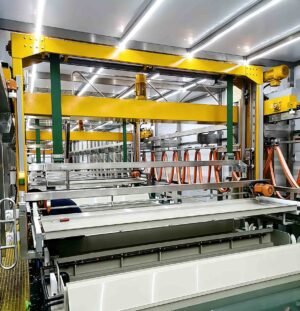
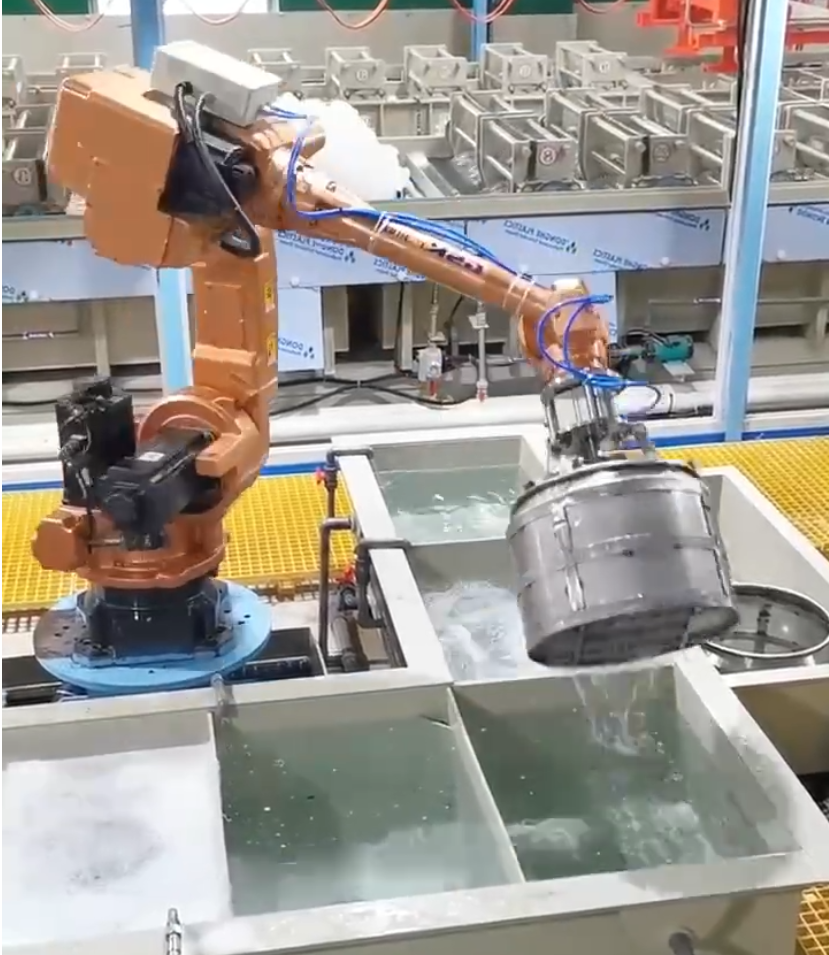
🛠️ What is Electroplating Equipment?
Electroplating equipment facilitates the process of depositing a thin metal coating onto a conductive surface using electrical current. The core principle is electrochemical: the workpiece (cathode) is immersed in a solution containing metal ions (electrolyte). When connected to a power source, metal ions are reduced and deposited onto the workpiece, forming a uniform metallic layer. This process enhances properties like corrosion resistance, wear resistance, electrical conductivity, and appearance.
A complete electroplating setup includes three essential parts:
- The Core Cell: Power supply, plating tank, anodes (metal source), and cathodes (workpiece).
- Auxiliary Process Equipment: Equipment for pre-treatment (polishing, cleaning) and post-treatment (drying, passivation).
- Control & Support Systems: Filtration systems, temperature controllers, and automated handling units.
⚙️ Main Types of Electroplating Equipment
Different production needs require specific equipment setups. The table below outlines common types:
| Equipment Type | Description & Mechanism | Typical Use Cases |
|---|---|---|
| Rack Plating Lines | Parts are mounted on racks and transported through process tanks. | Larger, delicate parts like automotive trim. |
| Barrel Plating Equipment | Small parts are tumbled in a rotating, perforated barrel within the plating solution. | Bulk processing of small items like screws, nuts. |
| Continuous Strip/Wire Plating Machines | A continuous strip or wire passes through the plating cell at high speed. | High-volume production of connectors, wires, and stamped components. |
| Selective/Specialized Plating | Targets specific areas. Includes brush plating or precision systems for micro-deposits. | Repair work, printed circuit boards, semiconductor contacts. |
🔍 Key Considerations for Selecting Equipment
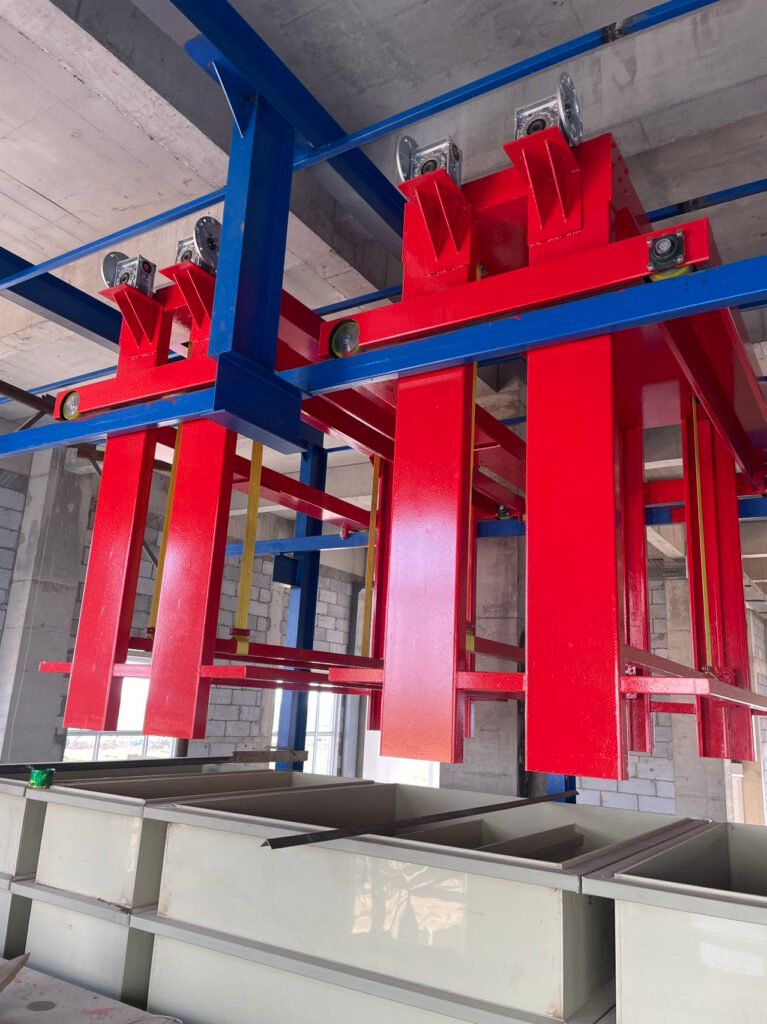
Choosing the right equipment depends on several factors. Here are the main ones to consider:
| Factor | Key Questions and Considerations |
|---|---|
| Production Scale & Output | Volume: High-volume continuous production requires automated lines, while batch processing suits rack or barrel systems. Automation: Manual, semi-automatic, or fully automatic options affect labor cost and consistency. |
| Workpiece Characteristics | Size & Shape: Determines rack design or suitability for barrel plating. Material: Base material affects pre-treatment needs and process compatibility. |
| Coating & Quality Requirements | Metal & Thickness: Different metals (Zn, Ni, Au, etc.) and thickness specs influence power supply and process control. Precision & Uniformity: High-precision industries (e.g., electronics) demand advanced control for uniform deposition. |
| Technical & Operational Factors | Process Integration: Equipment should integrate seamlessly with pre- and post-treatment stages. Ease of Control & Maintenance: Modern systems with programmable controllers offer flexibility and easier maintenance. |
| Regulatory & Business Factors | Environmental Compliance: Efficient rinsing, waste treatment, and closed-loop systems are increasingly important. Budget & ROI: Balance initial investment with long-term operational costs, productivity, and quality gains. |
In summary, successful electroplating relies on matching the right equipment to your specific parts, production goals, and quality standards. A thorough evaluation of these factors is the best path to a sound investment. For complex needs, consulting with experienced equipment suppliers for a tailored solution is highly recommended.
I hope this organized information helps you create your article. Would you like more details on any specific point, such as the technical specifications of a particular equipment type or the latest automation trends?