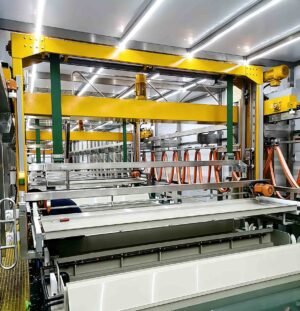
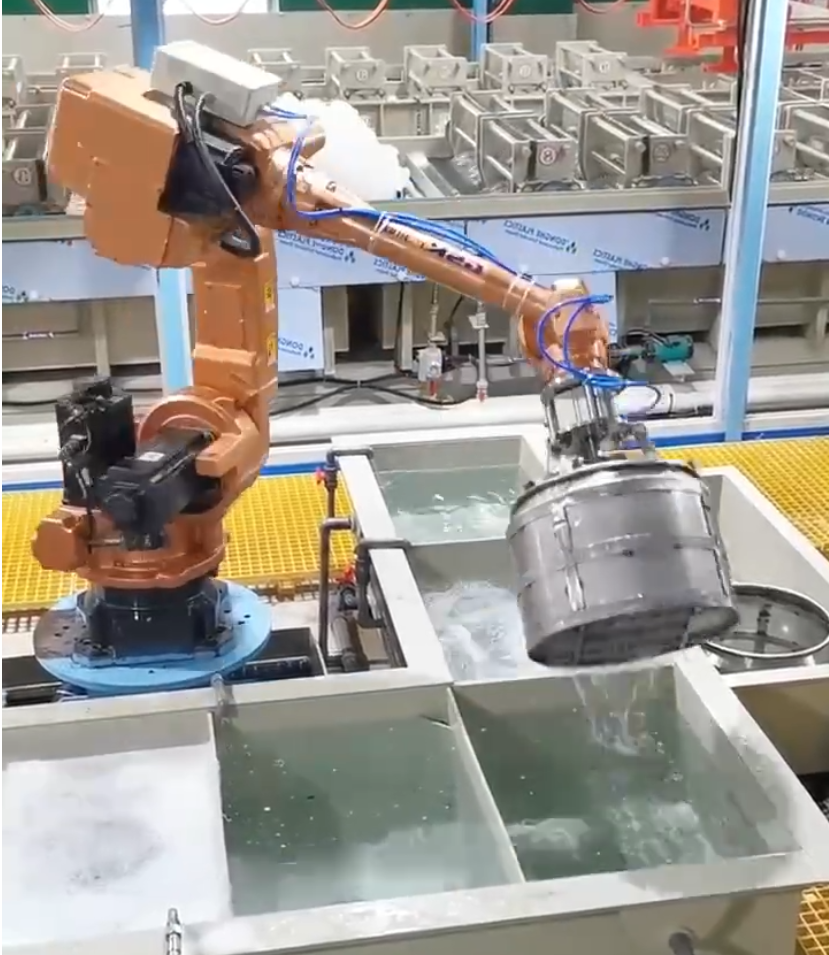
Anodizing: The Ultimate Guide to Electrochemical Surface Finishing for Metals
Date: March 6, 2026
Category: Surface Finishing Technology
Reading Time: 8 min
Introduction
Have you ever wondered why aluminum products—from smartphones to aircraft parts—can have such durable, vibrant, and corrosion-resistant surfaces? The secret lies in an electrochemical process called anodizing -9.
Anodizing (also known as anodic oxidation) is an electrolytic passivation process that transforms the metal surface into a durable, decorative, anodic oxide finish with excellent anti-corrosion properties -3. Unlike painting or plating, anodizing doesn’t add any material to the surface—it actually converts the existing metal into its oxide form, creating a coating that is fully integrated with the underlying substrate -3.
In this comprehensive guide, we’ll explore how anodizing works, its benefits, different types, and why it’s essential for industries ranging from aerospace to consumer electronics.
What Is Anodizing?
Anodizing is an electrochemical process that thickens the natural oxide layer on the surface of metal parts -5. The process is called “anodizing” because the part to be treated serves as the anode (positive electrode) in an electrical circuit -3-9.
The Basic Principle
In nature, many metals—especially aluminum—naturally form a thin oxide layer when exposed to air. This natural layer provides some protection, but it’s extremely thin (only about 2–3 nanometers) and can be easily damaged -9. Anodizing artificially thickens this oxide layer to 200–1,000 times its natural thickness, creating a robust protective shield -9.
How It Works: The Simple Science
Imagine you have a battery, a container of liquid that conducts electricity (like diluted sulfuric acid or even Coca-Cola!), and two metal pieces -9:
- Connect the aluminum part to the positive terminal of the battery (this becomes the anode)
- Connect an inert metal (like stainless steel) to the negative terminal (this becomes the cathode)
- Submerge both in the electrolyte solution
- Apply electric current – oxygen ions are released from the electrolyte and bond with aluminum atoms on the surface -3-6
The result? A controlled oxidation reaction that builds up a thick, hard, and incredibly durable aluminum oxide layer -6.
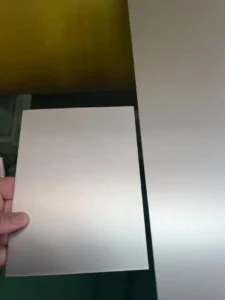
The Anodizing Process: Step by Step
1. Pretreatment (Cleaning)
The metal surface must be perfectly clean. This involves:
- Degreasing to remove oils and fingerprints
- Alkaline or acid etching to remove the natural oxide layer
- Desmutting to remove alloying element residues
2. Anodic Oxidation (The Main Process)
The prepared part is immersed in an electrolyte bath (typically sulfuric acid, but chromic acid or oxalic acid may also be used depending on requirements) -1-4. Direct current is applied, with the part as the anode.
During this stage, oxygen ions from the electrolyte combine with aluminum atoms at the surface, forming aluminum oxide (Al₂O₃). The oxide grows both outward from the original surface and inward into the metal, creating a structure that’s completely integrated with the substrate -3. This integration is why anodized coatings never peel or flake off -3.
3. Coloring (Optional)
The freshly formed anodic oxide layer has a porous structure that can absorb dyes and pigments -4-6. There are three main coloring methods:
- Electrolytic coloring – metal salts are deposited at the bottom of pores
- Organic dyeing – immersing in dye solutions
- Integral coloring – achieved during the anodizing process itself
4. Sealing
The final and crucial step is sealing the porous layer. The pores are closed through hydration, typically in hot water or steam, which converts the oxide to a more stable form. This step locks in any dyes and maximizes corrosion resistance -3.
Two Types of Anodic Oxide Films
Based on the electrolyte and process parameters, anodizing produces two fundamentally different types of oxide structures -4:
1. Barrier-Type Films
- Formed in near-neutral electrolytes (like borate or citrate solutions)
- Thin, dense, and non-porous
- Excellent dielectric properties
- Used primarily for electrolytic capacitors and electronic applications
2. Porous-Type Films
- Formed in acidic electrolytes (sulfuric, oxalic, phosphoric acids)
- Characterized by a honeycomb-like structure with regular, hexagonal pores -4
- Can grow very thick (up to 150 μm or more)
- Ideal for coloring, adhesive bonding, and wear-resistant applications
- The porous structure acts like “tiny containers” that can hold dyes, lubricants, or even antibiotics for medical implants -9
Benefits of Anodizing
Anodizing offers numerous advantages that make it indispensable in modern manufacturing -3-6:
| Benefit | Description |
|---|---|
| Corrosion Resistance | The oxide layer is highly stable and protects the underlying metal from environmental attack |
| Hardness & Wear Resistance | Anodic coatings are extremely hard—comparable to sapphire |
| Adhesion | Unlike paint or plating, the coating is part of the metal—no peeling or chipping |
| Color Stability | Many anodized colors are UV-stable and won’t fade |
| Environmental Friendliness | The process uses mainly water-based chemistry and produces minimal waste |
| Electrical Insulation | The oxide layer is non-conductive, useful for electronics |
| Cost-Effective | Relatively simple process with high throughput |
Anodizing vs. Other Surface Treatments
How does anodizing compare to electroplating and powder coating? Let’s break it down -6:
| Aspect | Anodizing | Electroplating | Powder Coating |
|---|---|---|---|
| Substrate | Aluminum, titanium, magnesium | Most conductive metals | Any metal |
| Coating Type | Oxide conversion (part of metal) | Deposited metal layer | Polymer resin |
| Thickness | No added thickness—metal converts | Adds thickness | Adds thickness |
| Durability | Excellent on aluminum | Varies by plating metal | Excellent |
| Color Options | Limited to dyes | Some color options | Extensive |
| Peeling Risk | None—integral with metal | Can peel if damaged | Can chip if impacted |
| Environmental Impact | Low | Medium to high | Low |
| Typical Applications | Aerospace, electronics | Conductivity, appearance | Decorative, exterior parts |
When to Choose Anodizing
- You’re working with aluminum, titanium, or magnesium
- You need maximum corrosion resistance without adding thickness
- You want permanent color that won’t peel
- The part will be exposed to harsh environments
When Electroplating Might Be Better
- You need electrical conductivity (silver or copper plating)
- You’re working with steel and want a decorative chrome finish
- You need a sacrificial coating (like zinc plating)
When Powder Coating Makes Sense
- You need any color imaginable with various textures
- The part doesn’t require precise dimensional tolerances
- You’re coating large, simple shapes
Metals That Can Be Anodized
Not all metals can be anodized. The process works best on so-called “valve metals” that form stable, protective oxides and only allow current to pass in one direction -9:
| Metal | Anodizability | Common Applications |
|---|---|---|
| Aluminum | ★★★★★ Excellent | Aerospace, architecture, electronics, automotive trim -2 |
| Titanium | ★★★★☆ Very Good | Medical implants, jewelry, aerospace (rainbow colors) -9 |
| Magnesium | ★★★☆☆ Good | Lightweight automotive parts, electronics |
| Tantalum | ★★★★☆ Very Good | Capacitors, medical implants |
| Niobium | ★★★★☆ Very Good | Jewelry, capacitors |
| Zinc | ★★☆☆☆ Limited | Limited applications |
| Steel/Iron | ★☆☆☆☆ Difficult | Specialized research applications only -7 |
Note: While research continues on anodizing iron-based alloys for applications like photocatalysis and energy storage, it is not yet commercially practical for corrosion protection -7.
Common Applications of Anodizing
Aerospace Industry
Anodizing is critical for aircraft components, where lightweight aluminum must withstand extreme conditions. The oxide layer provides excellent corrosion resistance without adding weight -6.
Architecture
From window frames to building facades, anodized aluminum offers weather resistance and architectural colors that last decades without fading -6.
Consumer Electronics
Smartphones, laptops, and tablets often feature anodized aluminum cases—durable, scratch-resistant, and available in beautiful finishes.
Automotive
Trim pieces, engine components, and wheels benefit from anodizing’s combination of appearance and durability -6.
Medical Implants
Titanium implants are anodized to improve biocompatibility and can even be colored to help surgeons identify sizes during procedures -9.
Cookware
High-quality pots and pans often feature anodized surfaces that resist staining and are easy to clean.
Quality Factors to Consider
When specifying anodizing for your project, keep these factors in mind:
- Alloy Composition – Different aluminum alloys respond differently to anodizing. High-silicon casting alloys may produce darker, less consistent finishes.
- Thickness Requirements – Specify the coating thickness based on your application:
- Class 1 (Architectural): 0.7–1.2 mils (18–30 μm)
- Class 2 (Industrial): 0.4–0.7 mils (10–18 μm)
- Hard Anodizing: 1.5–4.0 mils (38–100 μm)
- Sealing Quality – Proper sealing is essential for maximum corrosion resistance. Test methods include dye spot tests and admittance measurements.
- Color Matching – If color consistency is critical, work with your anodizer to establish acceptable color ranges and standards.
Conclusion
Anodizing is a remarkable technology that harnesses controlled corrosion to create one of the most effective surface finishes available. By transforming the metal surface itself into a hard, durable, and beautiful oxide layer, anodizing provides protection that simply cannot peel or chip away -3-6.
Whether you’re designing aerospace components that must survive extreme environments, consumer products that need to look good for years, or architectural elements that will face decades of weather exposure, anodizing offers a proven, cost-effective, and environmentally responsible solution.
The next time you pick up your smartphone or walk past a gleaming aluminum facade, you’ll know the science behind that perfect finish—it’s not paint, not plating, but the metal itself, transformed through the elegant process of anodizing.
Frequently Asked Questions
Q: Can anodized aluminum be welded?
A: Welding destroys the anodic coating in the weld area. It’s best to weld first, then anodize.
Q: How thick is anodizing?
A: Typically 5–30 μm for decorative applications, up to 100 μm for hard anodizing -4.
Q: Does anodizing change part dimensions?
A: Yes, slightly. The oxide grows outward and inward, so dimensions increase by about half the coating thickness.
Q: Can I anodize at home?
A: Small-scale anodizing is possible with proper safety equipment, but industrial results require professional facilities.
Q: Is anodizing expensive?
A: For most applications, anodizing is very cost-effective, especially considering its durability and long service life.
Need professional anodizing services for your next project? [Contact our team] for expert guidance and quality finishing solutions.